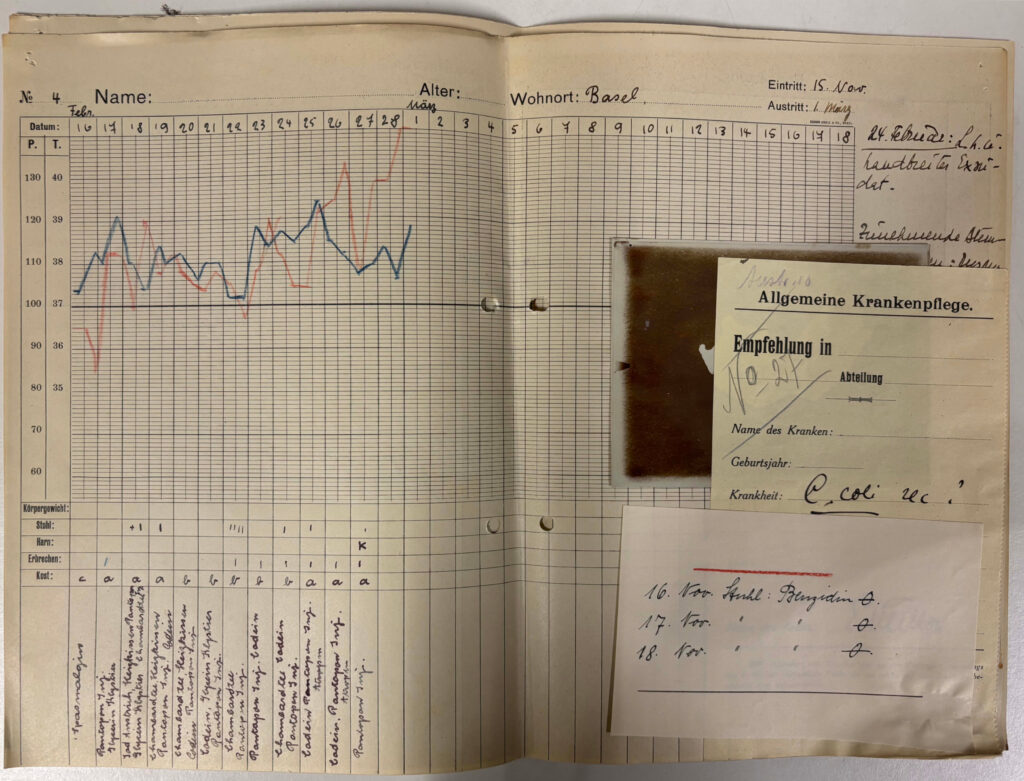
Despite its ubiquity, the medical discharge report/letter has received no sustained scholarly attention as a genre in its own right. Yet, physicians read, write, and rely on this crucial document countless times over the course of their careers: for every patient released from hospital, a letter is produced that condenses the complex clinical trajectory—diagnoses, interventions, complications, and recommendations—into a compressed narrative form. This form ↓ is dictated as much by institutional convention and medico-legal necessity as it is by clinical reasoning, and it circulates between hospitals, general practitioners, insurers, and patients themselves, shaping how illness is understood, communicated, and acted upon beyond the walls of the hospital. This project explores the narrativity, history, and ethics ↓ of a standardized, epistemic genre that organizes written medical communication worldwide. Given that the discharge report has not yet been subjected to scholarly investigation in the humanities, our project establishes the first state of the art in this field.
From Narrative to Norm
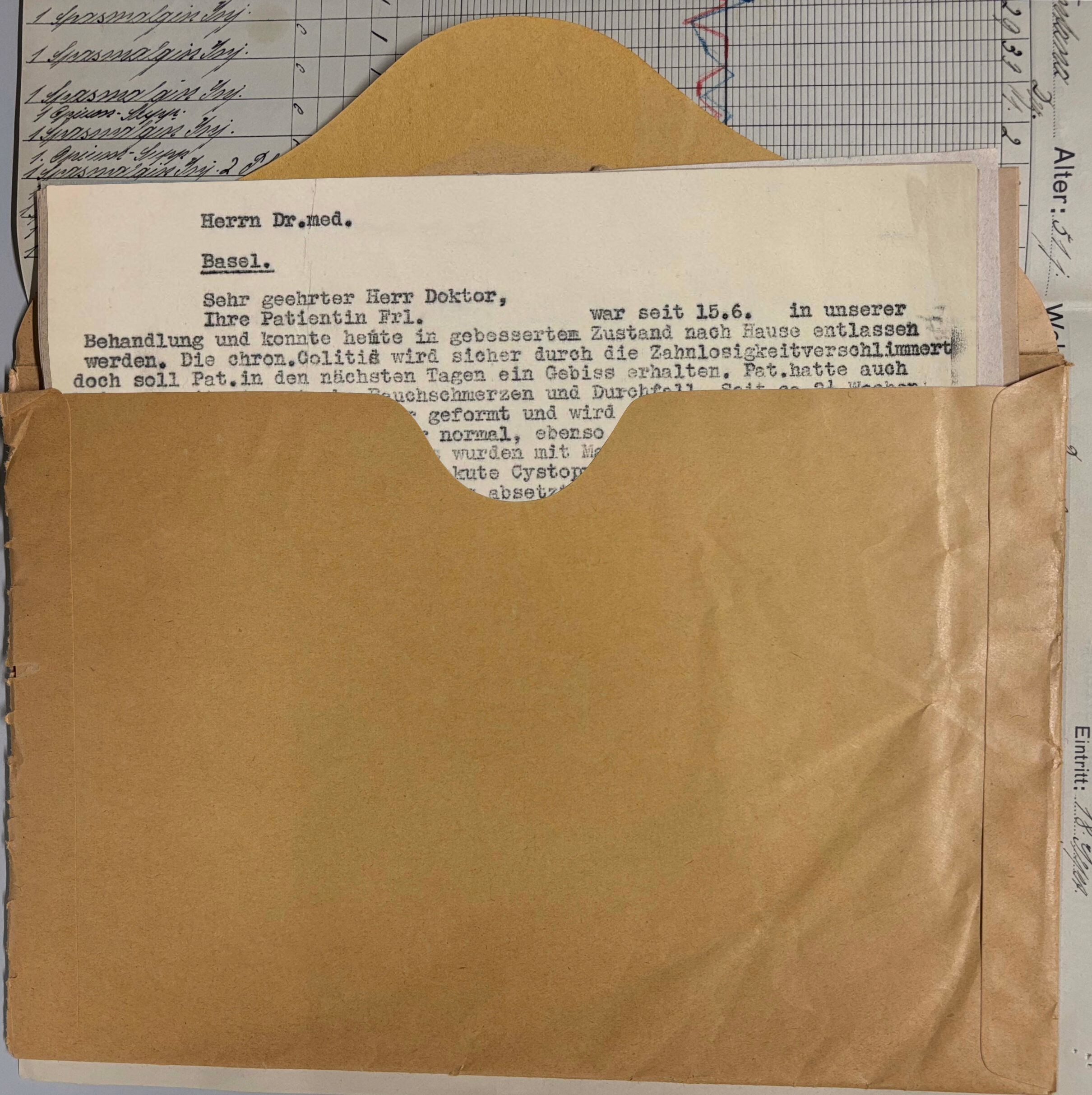
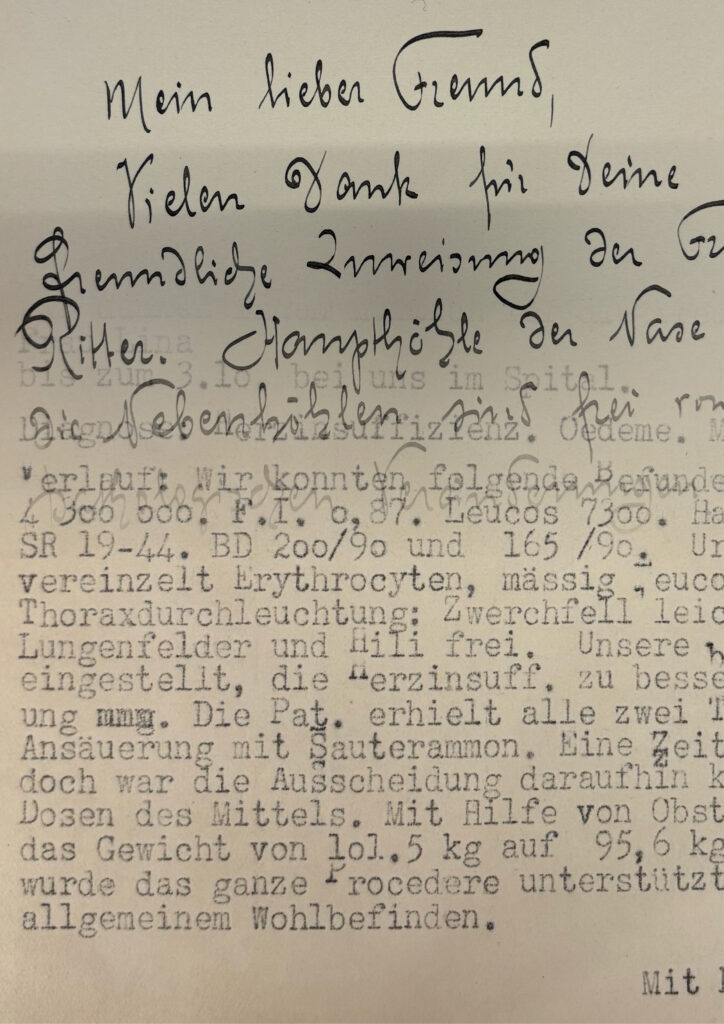
Our sources from both Swiss and German state and hospital archives indicate that the genre gradually developed during the 20th century: In the first part of the century, when letters from physicians to colleagues sporadically appear in medical files, illnesses are described in a rather subjective, narrative, even literary manner. After the mid-century, the discharge report appears more and more formalized and a necessary element of the patient file.
This historical trajectory seems to reflect developments in clinical medicine toward pluralism and specialization, as well as rapid technological development. Finally, it raises ethical questions about patients’ experiences in hospitals and about medical communication in general.
Three Aims, One Project
Cultural History & Literary Studies How physicians argue and reason narratively within the genre of the medical discharge report
History of Medicine How the discharge report has evolved historically––in conjunction with the changing role of the hospital over the course of the 20th century, in relation to the patient record, and in relation to the institutional structures of health insurance
Medical Ethics How the discharge report negotiates fundamental conflicts concerning paternalism, technology, and the principles of medical ethics, from a historical and systematic perspective.

Project Duration 8/2025 – 7/2029
News
-
November 20, 2026 – Jasmine & Tom @ the SGGMN Annual Meeting
Jasmine and Tom will present their talk “Through the Lens of the Hospital Discharge Report: A Novel Approach to the History of Medicine?” at the SGGMN/SSHMS annual meeting on November 20th, 2026 at the University of Bern. The discharge report has evolved from informal doctor-to-doctor letters into a standardized document central to hospital organisation, cost…
-
September 22 2026 – Agnes & Sophie @ 12. Konferenz des Netzwerks Technikfolgenabschätzung (NTA)
Agnes and Sophie will present their joint work at the 12th NTA-Tagung 2026 (Network for Technology Assessment Conference) at the OTH Regensburg. Their talk is titled: “Scoping Review: AI-Supported Clinical Documentation Among Physicians: A Scoping Review of Efficiency, Workload, and Psychological Outcomes in Inpatient and Emergency Care”. The conference, organised by the Institute for Social…
-
August 28 2026 – Sophie @ the 7th Trail Research Camp: On Artificial Intelligence, Lausanne
On 28 August 2026, Sophie will deliver a talk at the “7th TRΔIL Research Camp: On Artificial Intelligence” in Lausanne. The presentation is titled: “Scoping Review: AI-Supported Clinical Documentation Among Physicians: A Scoping Review of Efficiency, Workload, and Psychological Outcomes in Inpatient and Emergency Care”. The TRΔIL Research Camp (TReC 2026) takes place from 24…